Introduction to Smart Home Technology
The smart home market has experienced significant growth in recent years, with consumers increasingly adopting connected devices to enhance convenience, efficiency, and home security. As demand for integrated systems rises, major players in home furniture and electronics are forming strategic partnerships to provide seamless smart home experiences.
Overview of IKEA’s Smart Home Products
As a global leader in home furnishings, IKEA has been gradually expanding its range of smart home solutions. The company’s Trådfri product line, launched in 2016, offers smart lighting systems compatible with various home automation platforms. However, until recently, IKEA’s smart home offerings required additional hubs and controllers, which could complicate setup and increase costs.
Samsung SmartThings Platform
Samsung’s SmartThings platform has emerged as a leading smart home ecosystem, providing a centralized hub for managing connected devices from multiple manufacturers. With support for over 100,000 certified products, SmartThings offers voice control through Samsung’s Bixby assistant, mobile app integration, and compatibility with major smart home standards like Zigbee and Z-Wave.
Partnership Between IKEA and Samsung SmartThings
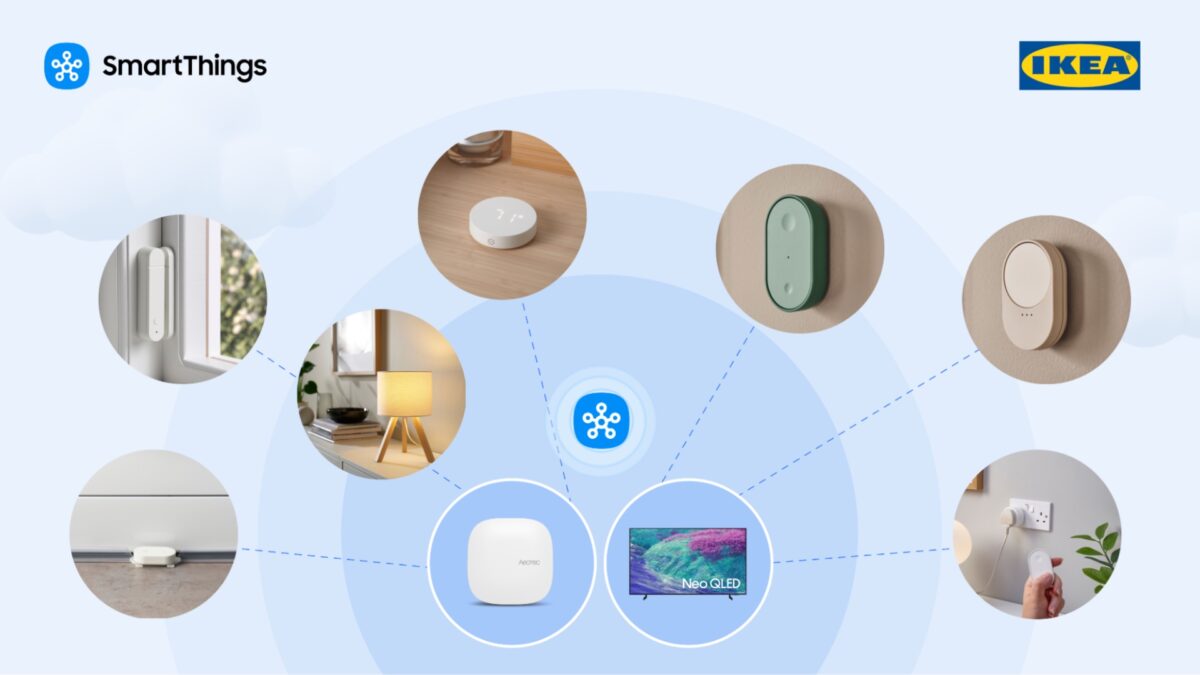
The collaboration between IKEA and Samsung SmartThings marks a significant step toward simplifying smart home integration. Beginning with select products, this partnership enables direct compatibility between IKEA’s smart lighting systems and the SmartThings platform, eliminating the need for additional hubs and accessories.
Key Features of the Partnership
- Seamless integration of IKEA smart lighting with Samsung SmartThings
- Elimination of requirement for additional hub devices
- Enhanced control through the SmartThings mobile app
- Voice command functionality with Bixby and other compatible assistants
- Future expansion planned for other IKEA smart home products
Benefits for Consumers
This partnership offers several advantages to consumers seeking affordable and user-friendly smart home solutions. By removing complexity and reducing costs associated with multiple hubs and controllers, IKEA and Samsung SmartThings make smart home adoption more accessible to mainstream consumers. Additionally, the integration allows for greater flexibility in creating automated routines and customizing home environments.
Cost Efficiency
One of the most significant benefits of this collaboration is the cost reduction for consumers. Previously, users needed to purchase an additional hub to connect IKEA smart lighting to a home automation system. With the direct SmartThings integration, consumers can achieve similar functionality at a lower cost.
Technical Implementation
From a technical perspective, the integration utilizes IKEA’s existing Zigbee-based smart lighting infrastructure and enhances it with direct SmartThings compatibility. This implementation allows for more stable connections and faster response times, as the system no longer relies on intermediary devices for communication between components.
Market Impact and Future Prospects
The partnership is expected to significantly impact the smart home market by lowering barriers to entry for consumers. As more households adopt smart home technology, this collaboration could lead to increased demand for Samsung SmartThings devices and complementary smart home products. Looking ahead, both companies have indicated plans to expand this integration to other product categories beyond lighting.
Consumer Adoption Trends
Industry analysts predict that this partnership will accelerate smart home adoption by making the technology more accessible and user-friendly. The combination of IKEA’s established retail presence and Samsung’s leading smart home platform creates a powerful synergy that can drive market growth.
Conclusion
The collaboration between IKEA and Samsung SmartThings represents a strategic move to simplify and democratize smart home technology. By focusing on user experience, affordability, and seamless integration, this partnership has the potential to significantly shape the future of connected home environments. As the market continues to evolve, we can expect to see further innovations that build upon this foundational alliance.
O autorze


